How many porta potties does OSHA require on a jobsite?
OSHA 1926.51(c)(1) sets the baseline for construction sites: 1 toilet facility for 20 workers or fewer, then 1 toilet seat and 1 urinal per 40 workers once you pass 20, and 1 seat and 1 urinal per 50 workers at 200 or more. A 15-person framing crew in Brick needs exactly 1 unit under that table. A 45-person crew crosses into the next bracket and needs 2 seats plus urinal capacity. Non-construction workplaces fall under a different standard, OSHA 1910.141(c)(1)(i), not the construction table. Potable water also has to be on site per OSHA 1926.51(a)(1). Most Brick contractors round up rather than sit right at the line, since a broken unit or a subcontractor spike can push a 20-person crew over the threshold mid-week. Check the full bracket breakdown on our OSHA portable toilet requirements page before you order for a construction site.
How many porta potties do I need for a backyard party or wedding?
Plan on 1 standard unit per 50 guests for a party under 4 hours with no alcohol. A 100-guest backyard wedding in Brick needs 2 standard units minimum, plus 1 ADA unit under ADA Standards section 213.2, which requires at least 5 percent of clustered single-user units to be accessible. Once you add a bar or extend past 4 hours, bump the ratio up. Standard units run in the $100 to $350 per day range depending on service level, and weekly rates start around $130. For a nicer guest experience, look at a deluxe flushable unit or a compact 2 stall restroom trailer instead of stacking standard units. Our wedding restroom rental guide breaks down trailer versus standard-unit tradeoffs for backyard and tented venues around Brick.
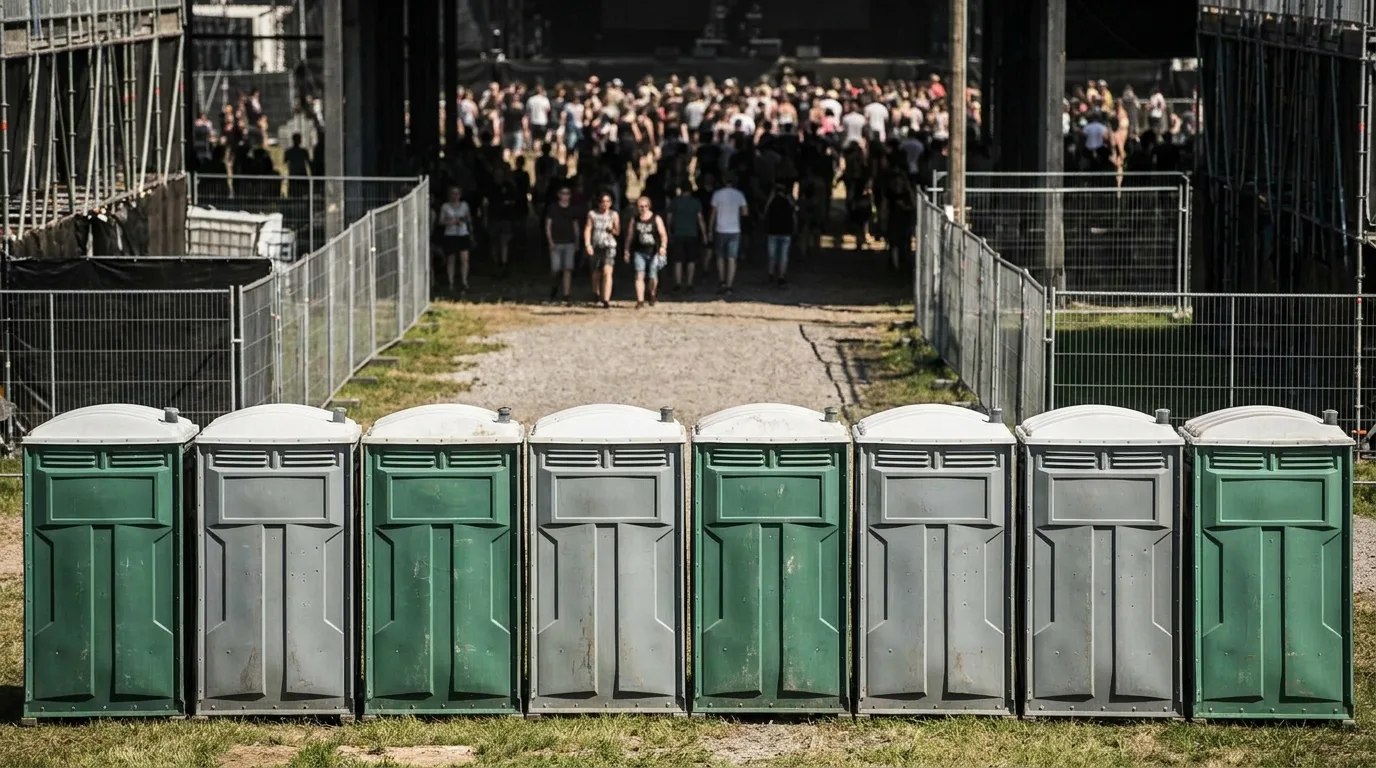
How many units does a festival or concert need per hour?
| Event type | Guests | Duration | Units needed |
|---|---|---|---|
| Corporate picnic | 100 | 4 hours | 2 standard |
| Community festival | 500 | 8 hours | 8-10 standard + 1 ADA |
| Multi-day festival | 500 | 3 days | 12+ standard, serviced daily |
| Concert with alcohol | 1,000 | 6 hours | 18-20 standard + ADA |
Alcohol service pushes usage up sharply because guests drink more water and use restrooms more often per hour. A festival that would need 8 units dry can need 10 or more once beer tents open. Multi-day events also need a servicing plan, not just more units, since a single Saturday-only rental won't hold up across a 3-day run. Standard event-rate units run $200 to $800 depending on scale, and a festival restroom rental or concert restroom rental plan should account for peak-hour lines, not just the daily average. ANSI/PSAI Z4.3 sets a baseline service interval of once per week for up to 10 users over a 40-hour week, which is a useful floor for planning multi-day service, though festival crowds move faster than that baseline assumes.
Should I add extra units for alcohol or a multi-day event?
Yes. Add roughly 20 to 30 percent more units when alcohol is served, and plan daily servicing, not just delivery and pickup, for anything running longer than a single day. A 2-day carnival with beer sales that would need 10 units for a dry daytime crowd should budget closer to 12 to 13, plus a same-day service stop between days. This is also where an emergency porta potty rental call comes in: if a unit tips or a line backs up mid-event, having a backup plan for Brick delivery matters more than the exact starting count. Weekend rates for standard units run in the $125 to $400 band, and that weekend pricing usually already assumes some multi-day wear.
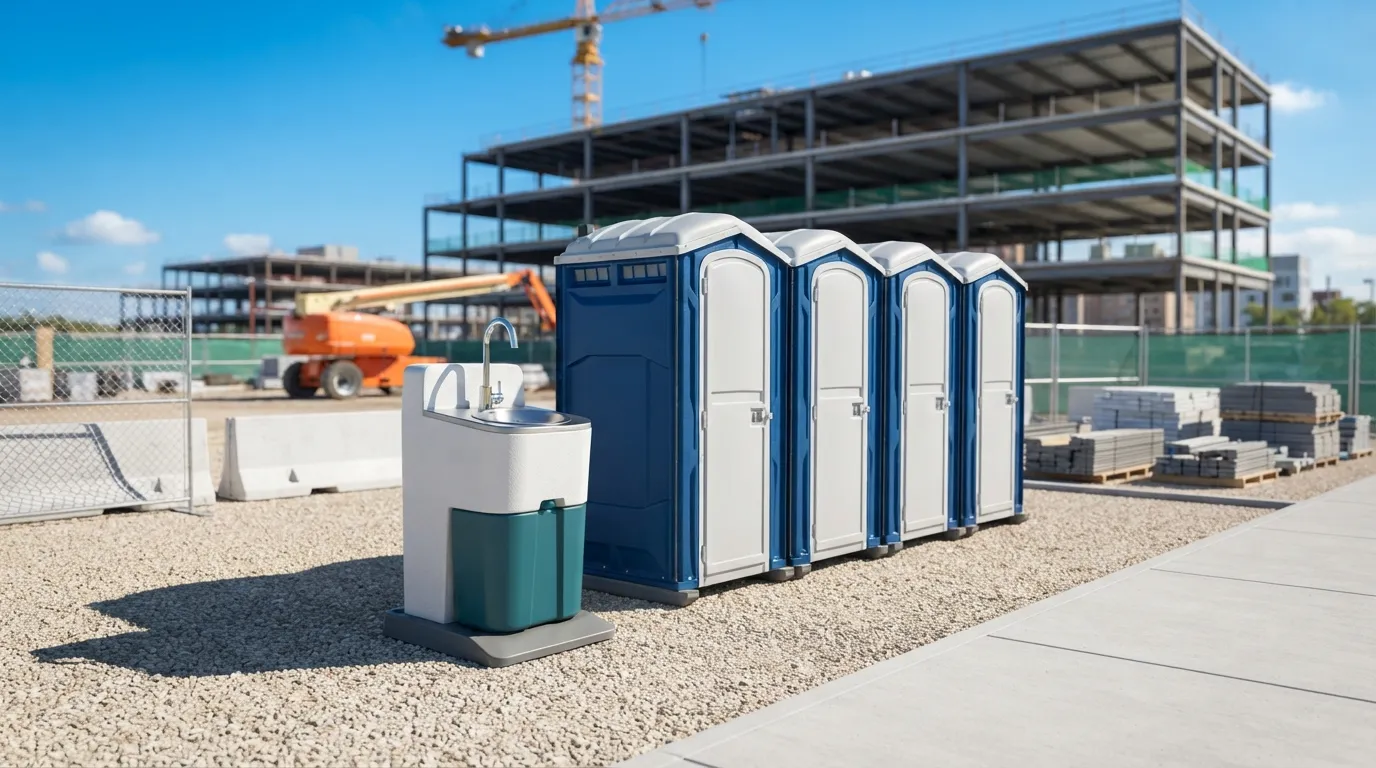
Worked example: a 40-person Brick renovation job
A 40-person renovation crew falls into the 20-to-40 bracket under OSHA 1926.51(c)(1), which calls for 1 toilet seat and 1 urinal once you're past 20 workers. Most contractors order 2 standard units to cover breaks without a line building at shift change. If painters or anyone applying coatings, herbicides or insecticides is on site, OSHA 1926.51(f)(1) requires washing facilities for that specific work, and a handwashing station rental or portable sink rental covers that separately from toilet count. Monthly standard rental in Brick runs $125 to $325, and a monthly porta potty rental makes more sense than daily billing once a job runs past 3 or 4 weeks. Pair the toilets with a 10 yard dumpster rental for debris and you've covered most of a small renovation's site needs; see home renovation porta potty for the full setup.
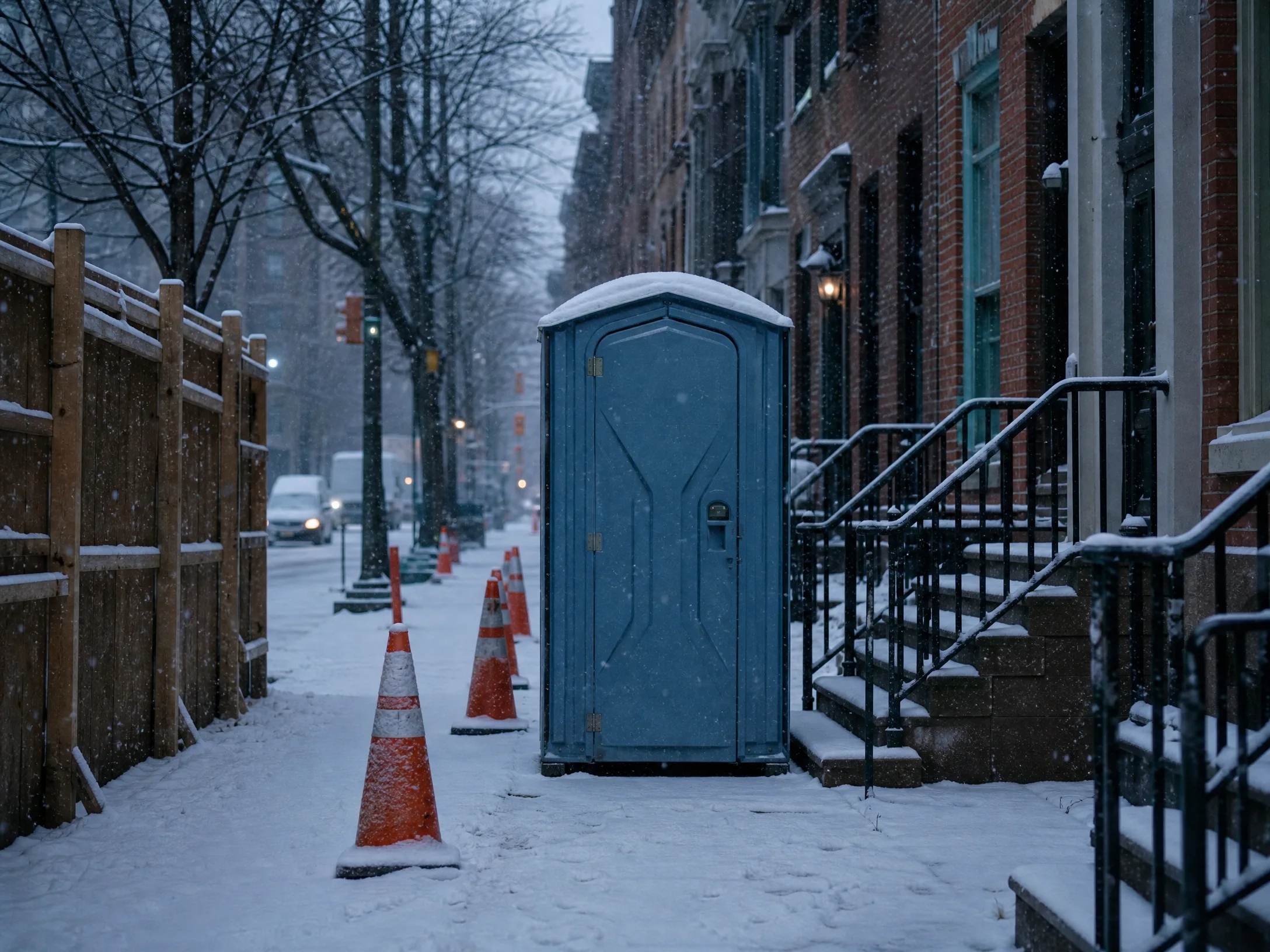
Worked example: a 500-person county fair weekend
A 500-guest fair running Friday through Sunday needs 8 to 10 standard units for daytime traffic, plus 1 ADA unit to satisfy ADA Standards section 213.2's 5 percent minimum. If food vendors serve alcohol, push that closer to 12 units and add a daily service visit rather than one drop-and-pickup. Event-rate standard units run $200 to $800 depending on how many you order and how long the fair runs, and ADA units run $120 to $240 per week separately. A fairground layout also needs to think about ground stability, since ADA Standards section 302.1 requires firm, slip-resistant surfaces under accessible units, which matters on grass lots after rain. Our county fair restrooms page covers layout and our how many porta potties do i need math scales the same way for a golf tournament or marathon and race course with staggered start times.
What about dumpster size if I'm renting toilets for a construction site?
Dumpster tonnage and cubic footage matter alongside toilet count on most Brick job sites, since both get ordered together. How many cubic feet in a 10 yard dumpster? About 135 cubic feet, which handles roughly 1 to 1.5 tons of mixed debris on a small renovation. How many cubic feet in a 20 yard dumpster, and how many feet is a 20 yard dumpster in length? It holds close to 270 cubic feet and runs about 22 feet long, and how many tons does a 20 yard dumpster hold comes out to roughly 2 to 3 tons. How many tons does a 30 yard dumpster hold? A 30 yard box holds around 400 cubic feet and can carry roughly 3 to 4 tons depending on material density, while how many tons does a 40 yard dumpster hold runs closer to 4 to 5 tons for lighter construction debris out of a 540 cubic foot box. Daily dumpster rental in Brick runs $51 to $112, and weekly runs $426 to $778. See dumpster sizes and dimensions for exact bracket specs and dumpster weight limits before you order a 30 yard dumpster rental or 40 yard dumpster rental for a full teardown job. A 20 yard dumpster rental covers most single-family renovations in Brick without overordering.
How many porta potties per 100 guests?
Plan on 2 standard units per 100 guests for a basic event under 4 hours with no alcohol. Add a third unit if alcohol is served or the event runs longer. For a wedding or upscale event, consider a deluxe flushable unit instead of a third standard unit, since guests notice the difference at that headcount.
Do I need an ADA unit even for a small event?
Yes, once you're clustering multiple single-user units. ADA Standards section 213.2 requires at least 5 percent of clustered units to be accessible, with a minimum of one, regardless of total headcount. A 40-guest backyard event with 1 standard unit still needs an ADA option if a guest requires one.
How many toilets does a 20-person crew need under OSHA?
A 20-person crew sits right at the top of the first OSHA 1926.51(c)(1) bracket, which covers 20 workers or fewer with 1 toilet facility. Add a worker and you cross into the next bracket, which calls for 1 seat and 1 urinal per 40 workers. Most Brick contractors order a second unit at 20 to avoid downtime.
How long can I rent a porta potty for a long-term project?
As long as the job runs. Daily rental starts around $100, weekly starts around $130, and monthly rental runs $125 to $325 for a standard unit. For anything past 4 weeks, monthly billing through monthly porta potty rental usually costs less per day than repeated weekly renewals.
What's the difference between a standard unit and a restroom trailer for events?
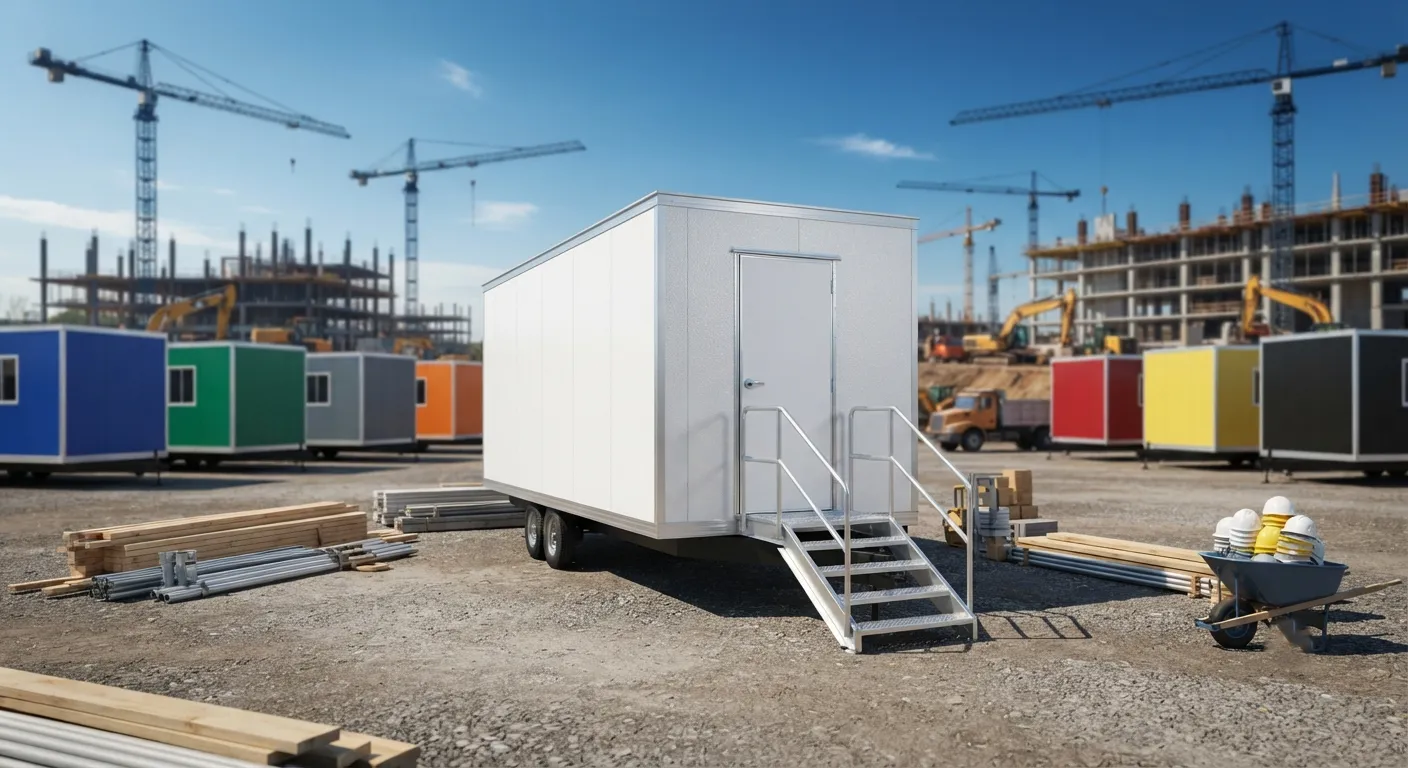
A standard unit is a single stall, about 44 by 48 inches on the ground and 92 inches tall, with a 60 to 70 gallon tank. A restroom trailer offers multiple stalls, running water and often climate control, priced from $175 per day up to event-scale multi-day rates near $3,500. Trailers suit weddings and corporate events better than a row of standard units.
Do I need extra units if my event serves alcohol?
Yes, add roughly 20 to 30 percent more units. Alcohol increases restroom trips per guest per hour compared to a dry event of the same size. A 500-guest fair that needs 8 units dry should budget closer to 10 to 12 once beer or wine service starts, based on the multi-day festival math above.
Next step
Get a delivery date
Tell us the address, the dates and the headcount. We size the order and confirm the route.